
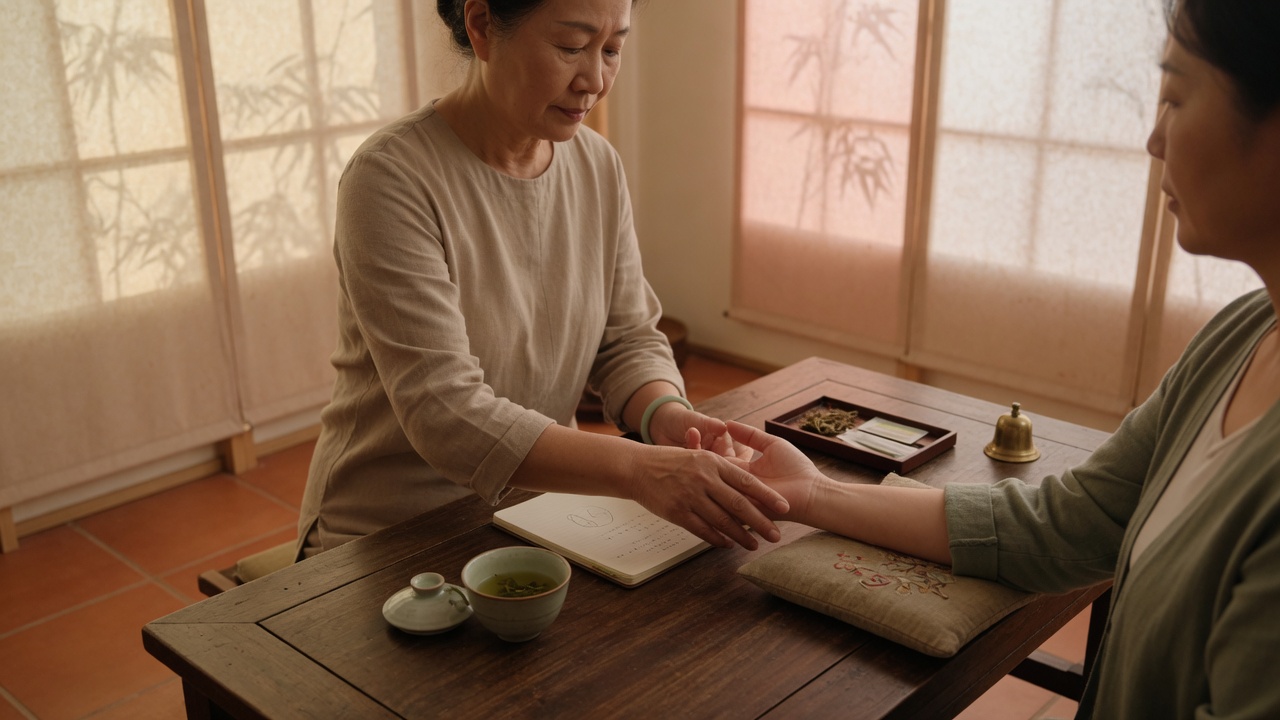
The four examinations
- Looking (wang): complexion, bearing, tongue body and coat
- Listening & smelling (wen): voice, breath, odors when relevant
- Asking (wen): chills/fever, pain quality, diet, sleep, emotions, cycle history
- Touching (qie): pulse positions and qualities; palpation of channels and ashi
From this, the practitioner names a pattern (for example, “cold-damp bi of the lower back” or “blood stasis in the collaterals”) and only then selects ba guan style and dose.
What are cupping marks (sha)?
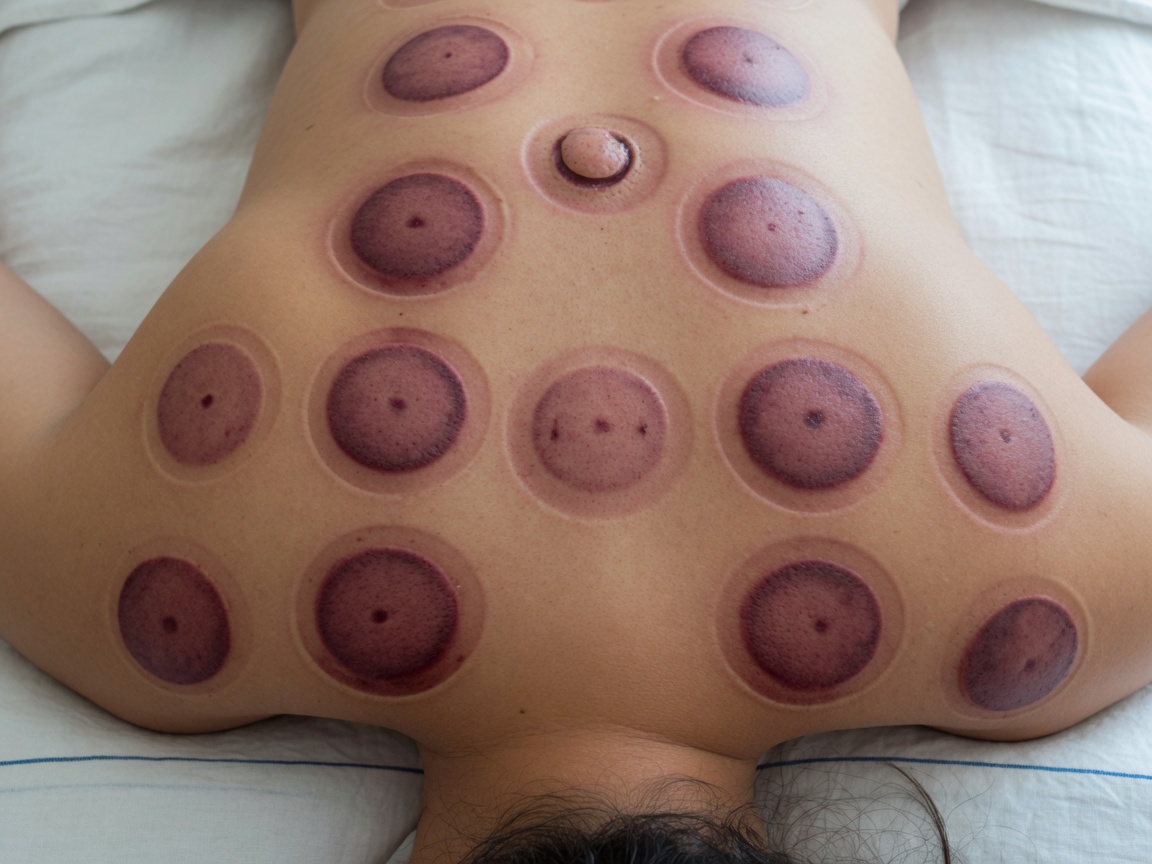
Sha is the reddish-to-purple discoloration after cupping. Physiologically it relates to local capillary change under suction. In TCM clinical conversation, practitioners may discuss shade and quality as reflecting the state of qi and blood in that area—especially stasis, cold, or heat—while still accounting for suction strength and individual skin.
Traditional color talk (with caution)
| Appearance often discussed | Clinical conversation in TCM |
|---|---|
| Light pink / bright red | Mild stagnation or recent exterior pattern; lighter suction |
| Dark red / purple | Stronger blood stasis or cold congealing discussed |
| Dusky with cool limbs history | Cold patterns considered |
| Blistering | Not a goal; may indicate excess suction or damp-heat—requires care |
Not “toxins leaving the body”
Popular language about cupping “pulling out toxins” is not classical TCM theory. Chinese medicine speaks of pathogens, phlegm, damp, stasis, and qi dynamic—not modern toxicology. Marks fade as the microcirculation recovers, typically over several days.
What practitioners watch after
- How quickly marks fade across visits
- Change in pain quality and range of motion
- Whether exterior symptoms resolve
- Whether the patient tolerates suction well